Zara posts thousands of openings every year across 90-plus countries. The competition is real, and the generic application advice floating around doesn’t cut it anymore.
If you’ve been refreshing the Inditex careers page, wondering why you’re not getting callbacks, the issue usually isn’t your resume. It’s that you don’t know what Zara is actually screening for.
This guide is written specifically for first-time fashion retail applicants and career changers who want to work at Zara but have no idea how the process really works from the inside out.
What Kinds of Jobs Does Zara Actually Hire For?
Zara’s jobs tend to cluster into two worlds: store-level roles and corporate roles. Knowing which world you’re targeting changes everything about how you apply.
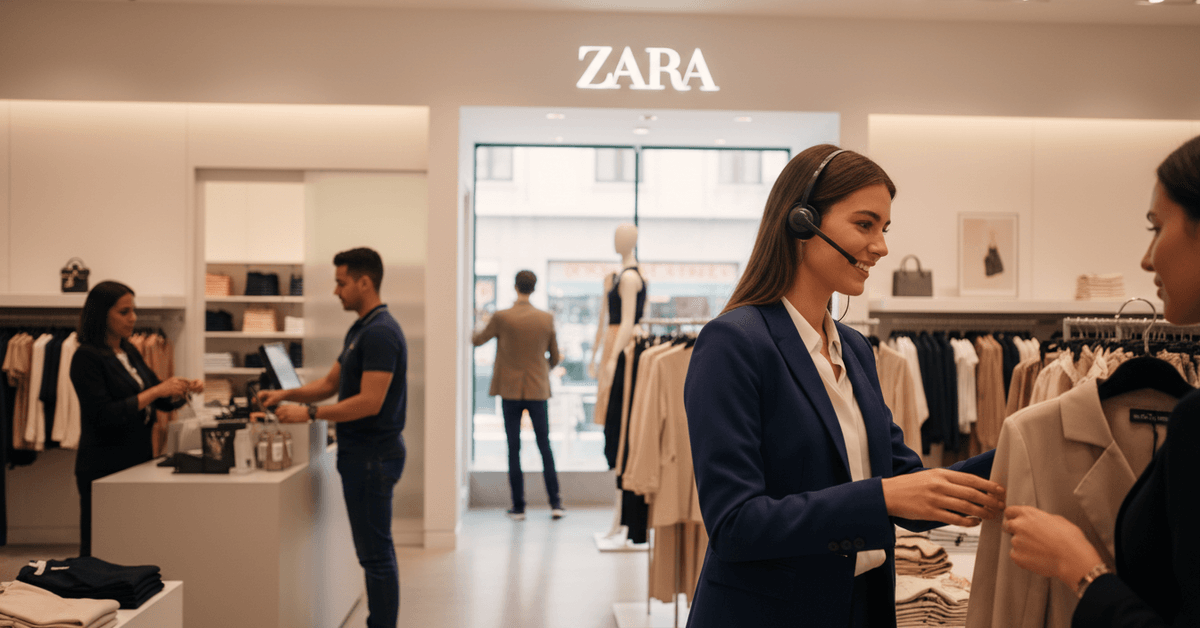
Store-level positions include sales assistants, cashiers, visual merchandisers, and stockroom associates. These roles are the majority of what Zara hires for globally, and they are posted frequently, especially around seasonal peaks.
Corporate roles in HR, buying, design, and logistics are fewer, and they almost always require applying through the Inditex Careers portal directly, not through third-party job boards.
The Role That Gets Overlooked: Visual Merchandiser
I think the visual merchandiser position is the most underrated entry point at Zara, and almost no one talks about it.
The monthly salary range sits between $1,500 and $2,500, above what a standard sales assistant earns ($1,200 to $2,100), and it gets far fewer applicants than customer-facing roles.
If you have any background in photography, interior design, or window display work, this is the lane to pursue. Zara updates its shop layouts constantly to match new collections, and they need people who can execute fast.

Where to Actually Find Zara Job Openings
A lot of first-time applicants waste weeks on third-party job boards that post outdated Zara listings. Those boards eventually redirect you to the official source anyway.
Go straight to the Inditex Careers portal. Filter by country, position type, and brand (select Zara). The listings there refresh regularly, and applying directly puts your application into the right pipeline.
Casting Days Are a Shortcut Most People Miss
Zara runs casting days in certain markets. These are walk-in recruitment events posted either in-store or on the local Zara social pages.
For store-based roles, showing up in person dramatically improves your visibility compared to submitting a digital application among hundreds.
If you live near a Zara location, it’s worth calling the store and asking if any casting days are scheduled. That single phone call can skip an entire round of the screening process.
LinkedIn Works, But Only If You Use It Right
Zara’s LinkedIn jobs page posts both corporate and store-level positions. The real edge LinkedIn gives you is the ability to see who at Zara is connected to your network.
A warm introduction to a store manager or HR contact matters more than a cold application, especially for corporate roles.
Building a CV That Zara’s Hiring Managers Will Read
A generic retail CV will get ignored. Zara’s hiring team sees hundreds of applications for each opening. The ones that move forward share a few specific qualities.
Multilingual candidates get a real advantage. Zara operates in over 90 countries. Arabic, Spanish, French, Japanese, German, and Portuguese are all listed as desired in various market postings. If you speak more than one language, that goes at the top of your resume, not buried at the bottom.
A strong Zara CV focuses on:
- Customer service situations where you solved a problem under pressure
- Teamwork evidence, ideally in a fast-paced environment
- Language proficiency, listed with honest competency levels
- Adaptability, especially if you’ve worked in seasonal or high-volume retail
Keep formatting clean. Single-column layouts read faster than multi-column designs. Less is genuinely more here.
The Interview Process: What to Expect at Each Stage
The Zara interview process varies by country and role, but most store-level hiring follows a recognizable pattern.
Stage One: Pre-Screen or Online Test
This is usually a brief call or a digital questionnaire. They’re filtering for basics: communication, availability, and whether you’ve done any homework on the brand.
Stage Two: In-Person or Virtual Interview
Questions at this stage tend to mix customer scenario questions with fashion-awareness questions. Two you can count on:
- “How would you handle a difficult customer?”
- “Which current fashion trends are you drawn to right now?”
The fashion question is the one most applicants flunk. Zara wants to see that you follow the brand’s collections, not just fashion in general. Go through the current Zara season before your interview. Know what’s on the floor.
Stage Three: Group Activities (Store Roles)
For retail positions, a group exercise often rounds out the process. Zara watches how you interact in team settings. Assertiveness without arrogance is what reads well.
Stage Four: Final Interview
This one sometimes involves the store manager or an area manager. At this point, you’re being evaluated for cultural fit as much as skill. Showing enthusiasm for the pace of fast fashion, not just a desire for a job, is what separates final candidates.
Salary Ranges and Benefits Worth Knowing
Pay at Zara varies by country, and the numbers below are international averages, not guarantees for every market.
| Role | Average Monthly Salary (USD) |
|---|---|
| Sales Assistant | $1,200 to $2,100 |
| Cashier | $1,100 to $1,900 |
| Visual Merchandiser | $1,500 to $2,500 |
| Store Manager | $3,000 to $5,500 |
Beyond base pay, Zara offers employee discounts on collections, seasonal bonuses, and flexible scheduling outside peak periods. Healthcare and paid leave depend heavily on local labor law.
I disagree with the common advice that entry-level retail pay “is what it is” and shouldn’t factor into which company you choose. At Zara, internal promotion is a documented part of the culture.
Employees who start as sales assistants move into supervisor and management roles, and a store manager pulling $3,000 to $5,500 per month started somewhere. The entry pay is a starting point, not a ceiling.
One Angle Nobody Talks About: Reapplying
The standard advice after a rejection is to move on. I think that’s wrong for Zara specifically. Zara hires in cycles tied to seasonal traffic, and a candidate who wasn’t right in October might be exactly who they need in February.
Persistence across multiple application windows is a documented pattern among people who eventually land roles.
Wait two to three months, refresh your CV, and apply again. The hiring team changes, the needs change, and your odds reset.
Questions People Ask About Working at Zara
Q: Does Zara hire people with no retail experience? Entry-level roles like sales assistant and cashier do not require prior retail experience. Customer service skills and enthusiasm for the brand carry more weight at the screening stage than a work history in retail specifically.
Q: How long does the Zara hiring process take? For store-level positions, most applicants hear back within two to four weeks of applying. Corporate roles take longer, often six to eight weeks, and sometimes involve additional assessment rounds.
Q: Can I apply to multiple Zara locations at once? Yes. The Inditex portal allows you to submit applications across multiple locations. Applying to several stores in your region increases your chances, especially during high-turnover periods.
Q: Do Zara employees get discounts? Zara employees receive discounts on store collections. The exact percentage varies by country and employment contract, so it’s worth asking during the interview stage rather than assuming a standard figure.
Q: Is it hard to get promoted at Zara? Zara has a well-documented internal promotion culture. Starting as a sales assistant and moving into a supervisory role within 12 to 18 months is not unusual in markets with high store volume.
Conclusion
Getting a Zara job in 2026 rewards candidates who do specific preparation, not general effort. The people who treat the brand like any other retail gig are the ones who don’t get callbacks.
Show up knowing the current collection, pursue the casting days most applicants ignore, and consider the visual merchandiser lane if you have any creative background.
And if the first application doesn’t land, reapply in three months without embarrassment. The best Zara employees usually tried more than once.