Getting a job at Nike sounds like a dream. Thousands of people apply every year, and the process has real teeth. This is what it looks like from the inside.
Nike hires across retail stores, corporate headquarters, logistics, and tech. The range is wider than people think. A software engineer and a store associate go through very different paths. The application process runs entirely online through Nike’s careers portal. No walk-ins, no paper forms. The digital filter matters more than most people expect.
Competition is high, but preparation closes a lot of that gap. Knowing what the hiring team looks for changes how you present yourself.
What Kinds of Jobs Does Nike Have?
The brand is global, and the job list reflects that. Some roles get hundreds of applications a week. Others sit open for months because the talent pool is small.
Common positions include:
- Retail Store Associate (customer service, product knowledge)
- Corporate Marketing Specialist (brand campaigns, content strategy)
- Product Designer (footwear, apparel, equipment)
- Supply Chain Manager (logistics, inventory, distribution)
- Software Engineer (apps, data systems, internal tools)
The corporate roles at Nike’s Beaverton, Oregon headquarters tend to be the most competitive. But retail positions at flagship stores in major cities can also attract a surprisingly large applicant pool.
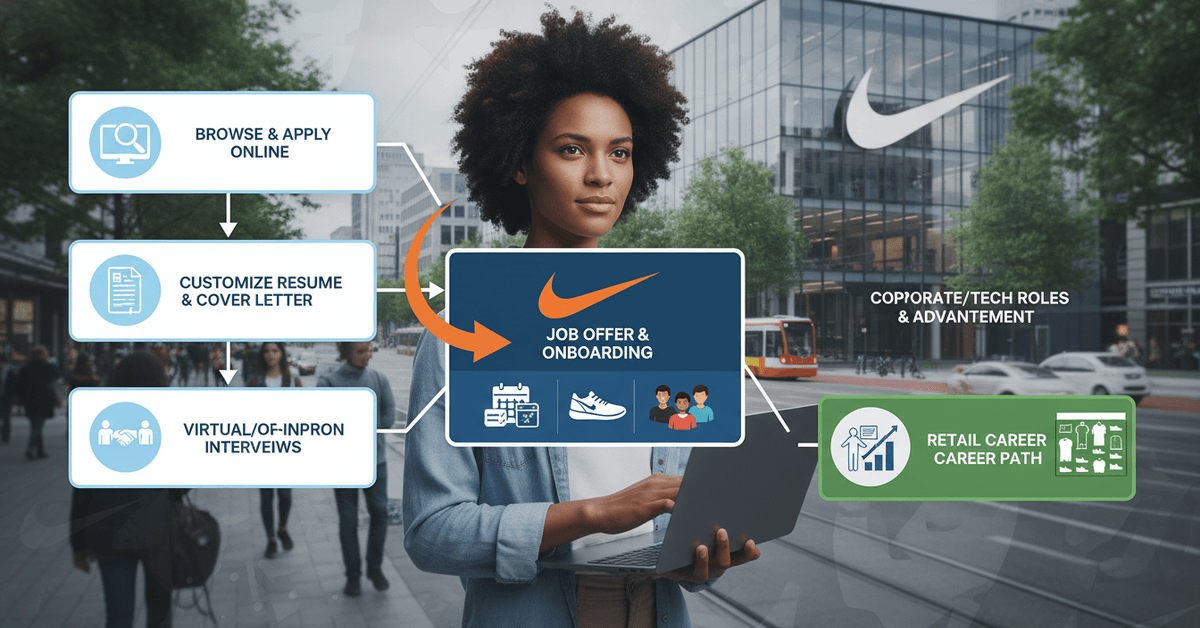
My take: the people who waste time applying to every open listing rarely get callbacks. Applying to two or three roles you are actually qualified for is a better use of your time than spray-and-pray.
Retail vs. Corporate: Different Jobs, Different Expectations
Retail roles at Nike prioritize customer communication and product enthusiasm. Sports background helps, but it is not required. A candidate who can explain a product clearly and handle a busy floor during a launch weekend is what store managers want.
Corporate roles require more documentation upfront. Portfolios, work samples, case studies. A marketing candidate who shows up with a PDF deck is going to be noticed differently from someone with only a resume.
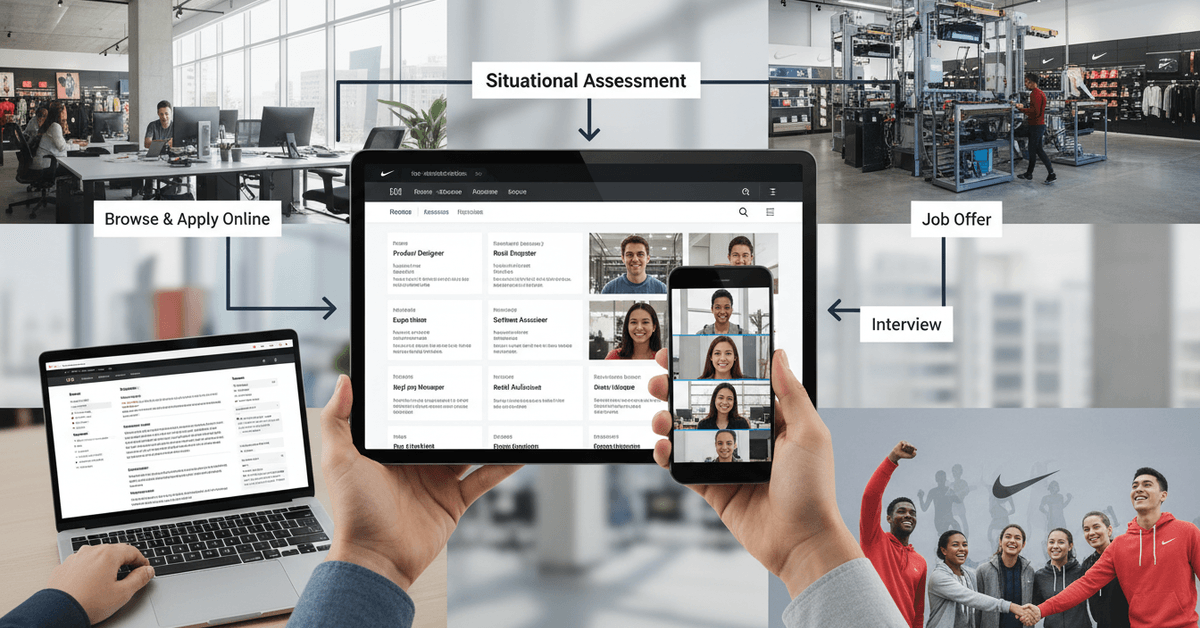
The Nike Hiring Process, Step by Step
This is the full path from first click to first day.
Step 1: Find a Role on Nike’s Careers Portal
Nike’s job search tool lets you filter by location, department, and job type. The interface is clean and works well.
Set up job alerts if you are targeting a specific department. Openings for retail roles appear more frequently than specialized HQ positions.
Step 2: Submit Your Application
Resumes get screened digitally before a human ever reads them. Keyword-matching matters here.
If the job listing mentions “cross-functional collaboration” or “data-driven decision making,” those phrases should appear somewhere in your resume if they honestly apply to your background.
Cover letters are not always required, but they help. One paragraph connecting your background to a specific Nike product line or initiative lands better than a generic opener about being passionate about sports.
Step 3: The Online Assessment
Some positions, especially retail, include a situational judgment test. These are not trivia. Nike wants to see how you would handle real customer scenarios. The tests gauge whether your instincts match their service culture.
I was skeptical about situational assessments until I read through Nike’s official inclusion and belonging page and saw how specifically they define their cultural expectations. The assessment questions map directly to those values.
Step 4: Interviews
Interview rounds vary by role. Retail candidates may have one or two conversations. Corporate candidates often go through three or four rounds, including panel interviews.
Expect behavioral questions. Nike interviewers frequently use the STAR format (Situation, Task, Action, Result). Preparing three or four strong examples from your actual work history covers most of what gets asked.
Video interviews have become standard for initial screening rounds. A clear background, decent audio, and a camera at eye level make a difference. These are basics, but they consistently separate candidates in early rounds.
| Stage | Format | What They’re Evaluating |
|---|---|---|
| Application | Online portal + resume | Keywords, qualifications |
| Assessment | Situational tests | Cultural fit, judgment |
| First Interview | Video or phone | Communication, background |
| Final Interview | In-person or panel | Depth, team fit |
| Offer | Email or phone | Finalized role + compensation |
Timelines vary. Some candidates hear back within two weeks. Others wait months, or hear nothing at all. Nike is a large organization and response speed is inconsistent across departments.
What Actually Makes a Nike Application Stand Out
I think the biggest mistake candidates make is treating the Nike application like any other job application. It is not. Nike’s identity is tied to a point of view, and they want to see yours.
A few things that consistently show up in feedback from people who got hired:
- Show specific knowledge about Nike’s products or campaigns, not just general admiration for the brand
- Connect your experience to teamwork, even in roles that seem individual-heavy
- Tailor your resume for each role, not just each company. A supply chain resume and a marketing resume from the same candidate should look meaningfully different.
- Internal referrals help. If you know someone at Nike, even casually, asking for a referral is worth doing. Many large companies prioritize referred candidates in their screening queues.
One thing I genuinely disagree with: the common advice to “show your passion for sports” in every application.
For corporate roles, this is mostly noise. A product designer applying to Nike’s apparel division needs a strong portfolio and process documentation. Nobody on that hiring panel cares whether you ran a half marathon.
What they care about is whether your design thinking fits their process. The sports enthusiasm framing works for retail. For HQ roles, lead with skills.
What to Do With Your Cover Letter
Skip the generic opening about loving the brand. Every applicant loves the brand. That sentence does nothing.
A better structure: open with one sentence about what you do, follow with one specific thing about Nike’s work that connects to that skill, then one line about what you bring to the role. That is 60 to 80 words. Short, specific, and actually readable.
Visa Sponsorship, Remote Work, and Global Applications
Nike hires globally, and the rules shift depending on where you are applying.
Visa sponsorship exists for some roles, particularly in tech and specialized corporate functions. It is not a blanket policy. Check the individual job listing, because Nike is specific about which positions include relocation or sponsorship support.
Remote and hybrid roles expanded after 2020, and some of that flexibility has held. Corporate roles at HQ tend to have a hybrid expectation. Retail and warehouse positions require on-site presence, full stop.
Language requirements depend on the region. English is the working language for global offices. For local retail or administrative roles, fluency in the regional language is often a practical requirement, not just a preference.
Nike’s careers FAQ covers region-specific details better than any third-party source.
Questions People Ask About Getting a Job at Nike
Q: Do I need a sports background to work at Nike? For retail, a genuine interest in athletics helps with product conversations. For corporate roles, it is largely irrelevant. A software engineer, accountant, or HR specialist at Nike headquarters needs their domain expertise, not a running history.
Q: How long does the Nike hiring process take? Timelines range from two weeks to several months, depending on the role and team. There is no standard wait time. The silence does not always mean rejection, but following up once after two weeks is reasonable.
Q: Does Nike offer internships? Nike runs internships in product design, marketing, and technology across multiple countries. Competition for these is high. A strong portfolio and a clear sense of which Nike team you want to join matters more than a long resume at the internship stage.
Q: Can I apply to multiple roles at once? Technically yes. Practically, applying to roles you are genuinely qualified for gets better results than mass-applying. Hiring teams can sometimes see your activity on the portal.
Q: Is the online assessment hard to pass? The situational judgment tests are not difficult if you have read Nike’s stated values beforehand. They test whether your instincts match the company’s customer service philosophy, not your general intelligence.
Conclusion
A Nike job application rewards specificity. Read one job listing closely, and you will learn what one Nike hiring team actually wants to see. Target that. Apply wide and you are invisible; apply precisely and you are a candidate worth calling back.
The process is long, sometimes frustrating, and occasionally silent for weeks. That is normal for a company this size. Stay sharp between applications, and treat each round of feedback as data.